
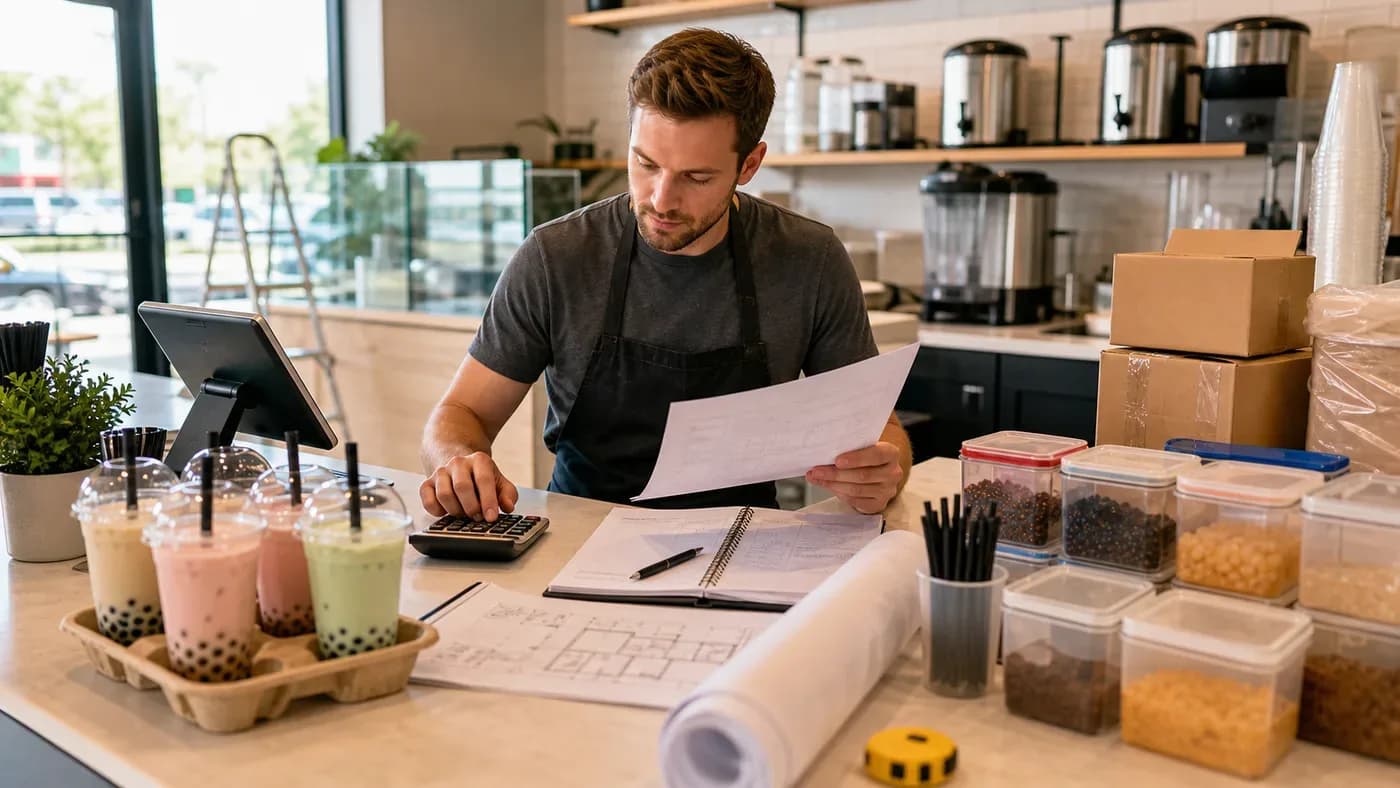
Start with total project cost, not a single average
The cost to open a bubble tea shop depends on the format. A small boba counter inside an existing food hall is a different project from a 1,200 square foot cafe with seating, a new grease trap, custom millwork, and a franchise package. That is why a single average can be misleading.
A better approach is to build a total project cost. Separate one-time startup costs from monthly operating costs, then add a cash reserve. The U.S. Small Business Administration recommends identifying startup expenses, estimating each cost, and organizing them into one-time and monthly expenses before launch. That structure fits a bubble tea shop well because the owner must pay for equipment, permits, inventory, packaging, rent, payroll, utilities, insurance, and marketing before sales are stable.
One-time startup costs to budget
A practical independent boba shop budget usually starts with lease deposits, design or professional fees, renovation, plumbing and electrical work, drink equipment, refrigeration, POS hardware, signs, furniture, opening inventory, packaging, staff training, licenses, insurance setup, and launch marketing.
Equipment can include tea brewers, fructose dispensers, shakers, sealers, blenders, tapioca cookers, induction or gas cooking equipment, refrigeration, ice storage, water filtration, sinks, shelving, and smallwares. Not every shop needs every machine on day one. Owner-operated shops can start with fewer automation tools, while higher-volume shops may need multiple workstations to avoid bottlenecks.
Buildout is often the budget line that surprises new operators. A second-generation beverage or cafe space may need mostly cosmetic updates. A raw space may need plumbing, electrical, drainage, HVAC, counters, menu boards, flooring, restrooms, accessibility work, and inspections. Before signing a lease, ask the landlord and local authority what improvements are required for foodservice approval.
Monthly operating costs after opening
After opening, the major recurring costs are rent, payroll, ingredients, packaging, utilities, software, insurance, marketing, repairs, payment processing, bookkeeping, and tax-related professional support. For a lean shop, the owner may cover many hours personally. For a longer-hours storefront, labor becomes one of the largest monthly cost lines.
Use current local wage data rather than national guesses. The BLS May 2025 occupational wage release reports food preparation and serving related occupations at a national mean hourly wage of $17.86, while fast food and counter workers are a large occupation group with lower average wages. Your actual payroll budget can be much higher in high-minimum-wage cities or when you need experienced shift leads.
Utilities also deserve a real line item. The U.S. Energy Information Administration identifies food service buildings as among the most energy-intensive commercial building types, at 263 MBtu per square foot. For a boba shop, refrigeration, ice, hot water, cooking pearls, HVAC, and dishwashing can make utilities meaningful even when the store is small.
What each budget tier should prioritize
For a lean counter, the priority is proof of demand. Spend on drink quality, food-safe workflow, reliable cups and sealing, basic signage, a simple POS, and enough opening stock. Avoid a broad food menu, too many cup sizes, and expensive custom printing before the recipe and sales mix are proven.
For a standard independent shop, the priority is repeatable service. Budget for a proper prep flow, cold storage, dry storage, staff training, pickup handoff, delivery packaging, and a reorder system. This tier should still stay disciplined: three or four drink sizes, a focused topping list, and a clear menu board are usually stronger than an overloaded launch.
For a full cafe or premium buildout, the priority is fixed-cost control. A larger space can create more sales capacity, but it also raises rent, utilities, payroll, furniture, cleaning, and opening inventory. Before choosing this tier, calculate the daily cups you need to sell to cover rent, labor, ingredients, packaging, loan payments, and owner pay.
Menu size directly changes startup cost
Every new flavor, topping, cup size, lid type, and food item adds inventory cost and operational complexity. A launch menu with milk tea, fruit tea, matcha, coffee, smoothies, and desserts may sound attractive, but it requires more ingredients, storage, staff training, recipe controls, packaging, and waste management.
A tighter first menu is often safer. Start with the drinks that define the brand, then add seasonal or premium items after you know the real sales mix. For packaging, a starter set might use 12 oz, 16 oz, and 24 oz cups, matching lids or sealing film, jumbo boba straws, regular straws, carriers, napkins, and handle bags. This keeps reordering and staff training simpler.
Licenses, food safety, payroll, and tax planning
Bubble tea shops are foodservice businesses, so local licensing and inspection rules matter. SBA guidance points owners to licenses and permits before launch, while the FDA Food Code is a model used by many jurisdictions for retail food safety rules. Your city, county, or state authority decides the actual permit path.
Payroll planning should include minimum wage rules, overtime risk, payroll taxes, workers' compensation requirements, and scheduling coverage. The U.S. Department of Labor administers and enforces federal minimum wage law, but many states and cities set higher wage requirements.
Tax treatment also matters. IRS Publication 583 explains federal tax information for people starting a business and keeping records. For a shop owner, clean records help separate startup costs, equipment, inventory, payroll, rent, and operating expenses from the beginning.
Funding and cash reserve
Common funding paths include owner savings, family investment, partner capital, equipment financing, bank loans, SBA-backed loans, community lenders, and sometimes crowdfunding. SBA 7(a) loans are one federal-backed option for small businesses that qualify, but lenders still review credit, collateral, cash flow, owner contribution, and the business plan.
The important question is not only how much you can raise. It is how long the shop can operate while sales stabilize. A safer plan keeps several months of rent, payroll, ingredients, packaging, utilities, software, and marketing in reserve. A shop can run out of cash even when customers like the drinks if reorder timing and fixed bills are not planned.
How GreenPack Life can help with the opening budget
Packaging is not the largest startup cost, but it touches every sale. A bubble tea shop should budget cups, lids or sealing film, jumbo boba straws, regular straws, cup carriers, napkins, labels, handle bags, and sample testing before opening day.
GreenPack Life can help turn the drink menu into a quote-ready opening packaging list. Share your planned cup sizes, expected daily cups, topping style, sealing or lid preference, delivery ZIP code, opening date, sample needs, and any custom printing plan. The goal is to avoid wrong-fit lids, missing straws, weak carryout bags, and overbuying slow-moving sizes before sales data exists.