
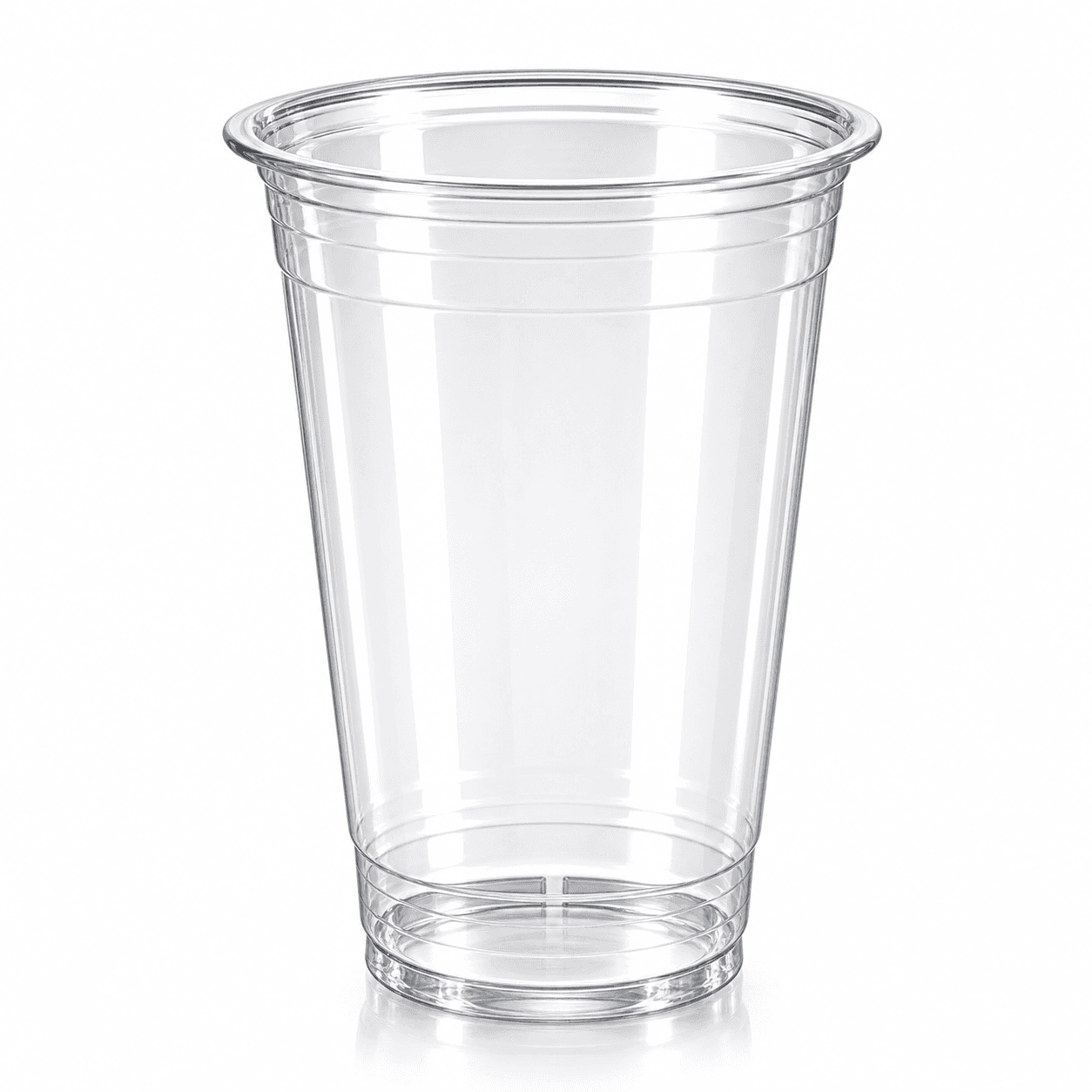
Start with the menu name customers understand
A shop owner may buy PET cold cups from a factory, but the customer is looking for a boba cup, bubble tea cup, milk tea cup, smoothie cup, or iced coffee cup. The guide should therefore start with the market name and the drink experience, then explain the PET specification behind it.
For a launch menu, map every drink to a customer-facing size first: sample, small, regular, large, or jumbo. After that, translate the menu into exact cup capacity, rim family, lid style, straw requirement, and case quantity. This keeps the buying process practical instead of turning the page into a production catalog.
Pick three or four sizes instead of every possible cup
Most boba shops do not need seven cup sizes on day one. Too many options slow down ordering, increase lid confusion, and create more half-used cartons in storage. A cleaner setup is one small size, one regular size, one large size, and sometimes one jumbo or sample size.
A practical starter set could be 12 oz, 16 oz, and 24 oz for small, regular, and large drinks. Shops with a heavier smoothie or fruit tea menu may add 20 oz as the main medium-large cup. Event programs, stadium stands, and high-ticket specialty drinks can test 32 oz as an upsell after demand is proven.
Leave room for ice, pearls, foam, and syrup
Boba drinks need more usable space than a plain cold drink because the cup may hold tapioca pearls, jelly, pudding, popping boba, ice, milk cap, foam, syrup layers, or fruit pieces. A cup that looks large enough for liquid alone can feel too small once toppings and ice are added.
Use 16 oz for a regular milk tea only after testing the real recipe. If the drink includes heavy toppings, thick foam, or a visual fruit layer, a 20 oz or 24 oz cup may create a better customer experience and a cleaner sealing or lidding workflow.
Confirm PET rim fit before ordering lids
After the menu size is clear, confirm the PET rim diameter. A 95mm boba cup needs a compatible 95mm lid or sealing setup; a 98mm cup needs the matching 98mm family. Capacity and rim are separate decisions, so two 16 oz cups can still require different lids.
For boba service, review the lid together with the straw. A flat lid may suit iced coffee or fruit tea, while a dome lid can give extra space for foam or toppings. If the drink uses tapioca pearls, quote jumbo boba straws with the cup instead of treating straws as a separate last-minute accessory.
Check equipment, storage, and delivery handoff
Cup height, bottom diameter, stack height, carton size, and carrier fit all matter in a working shop. A tall 24 oz cup may look attractive on the counter but still need to fit the sealing machine, pickup shelf, cup dispenser, car cup holder, and delivery carrier.
Before a bulk order, pack real test drinks and move them through the actual handoff path: counter service, pickup shelf, delivery bag, drink carrier, and customer carryout. Watch for lid lift, straw mismatch, top-heavy cups, condensation, and weak bag support.
Sample before scaling a DDP order
Samples help confirm clarity, wall feel, lid fit, stackability, sealing behavior, and how the cup looks with your actual milk tea, fruit tea, smoothie, or iced coffee. They are especially useful when changing rim families or moving from generic stock cups to custom printed boba cups.
For a DDP quote, connect the sample decision with the bulk buying decision. Record capacity, rim family, lid style, straw size, carrier need, case pack, destination, and artwork requirement. That record turns boba cup sizing into a repeatable purchasing standard instead of a one-time comparison between similar-looking cups.