
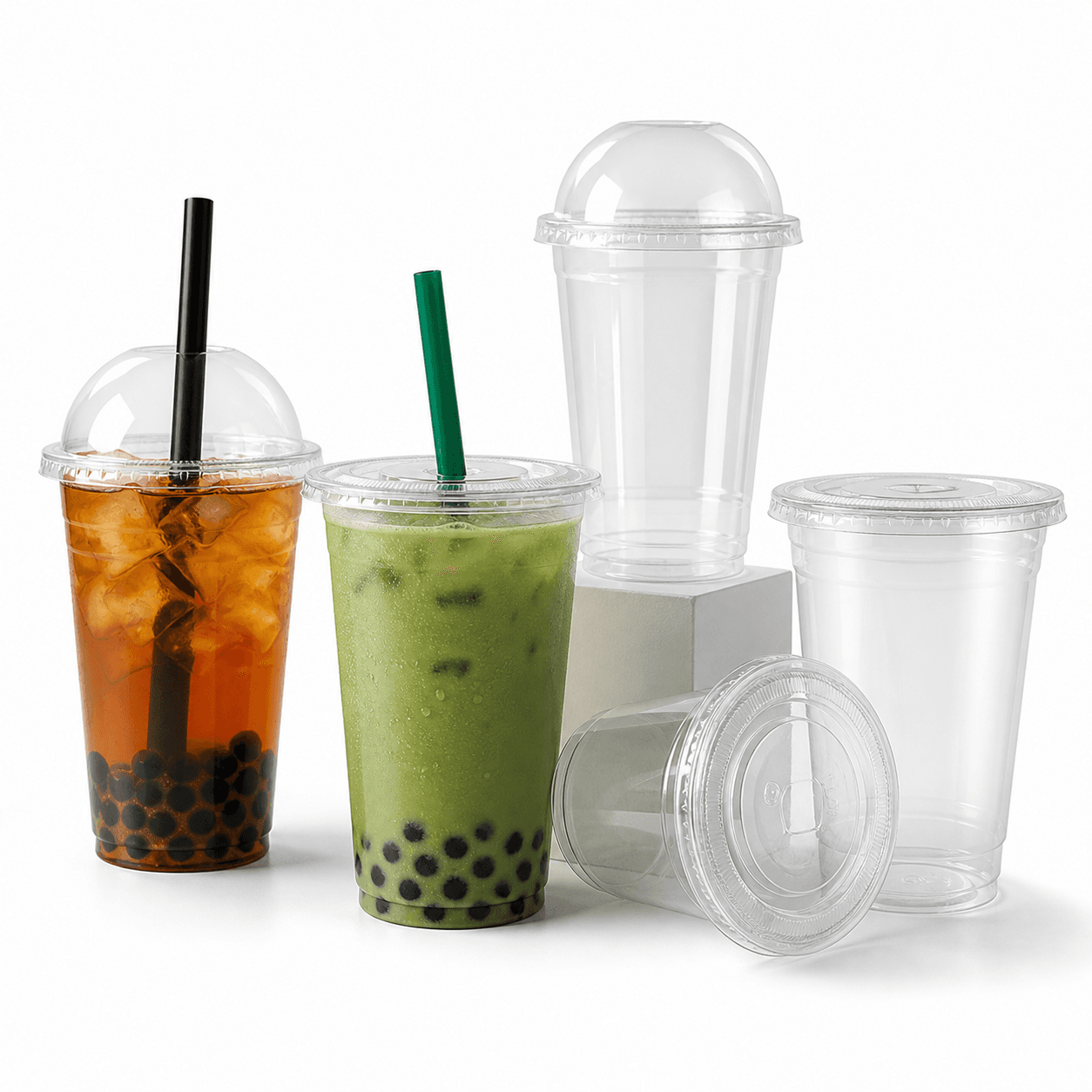
Core drink packaging
Start with cup size, rim diameter, lid style, straw diameter, and whether the drink uses a sealed film or a snap-on lid. PET cold cups are common for iced tea, fruit tea, iced coffee, and smoothies.
For many boba shops, 16 oz and 20 oz cups cover the daily menu, while 24 oz and larger sizes support fruit tea, smoothies, and promotional drinks. The capacity decision should be paired with rim diameter, because lid fit is what protects the customer handoff.
Takeout handoff items
Most boba orders need more than a cup. Cup carriers, kraft handle bags, napkins, and straw wrappers make multi-drink pickup and delivery easier for staff and customers.
A good checklist separates counter service from delivery. Counter service may only need cups, lids, and straws. Delivery and multi-drink orders usually need carriers, reinforced paper bags, and a packing rhythm that keeps drinks upright.
Custom printing checks
Before asking for branded cups or bags, prepare artwork, print color expectations, order quantity, delivery ZIP code, and whether samples or proofs are needed.
Branded packaging is easiest to quote when the product family is already clear. Decide whether the logo belongs on PET cups, sealing film, paper bags, sleeves, or a combination. That keeps artwork review connected to actual production requirements.
Sealing systems and straw fit
If your store uses sealing machines, confirm cup diameter and film compatibility before buying. A sealed cup workflow has different fit requirements than a dome-lid smoothie workflow or a straw-slot flat-lid workflow.
Boba toppings also change straw choice. Jumbo straws are common for pearls and toppings, while regular straws may fit tea or iced coffee. Quote straws with the cups so accessory fit is not solved after the cups arrive.
How to build a first order
A practical first DDP request can include two cup sizes, matching lid families, jumbo straws, carriers, and handle bags. Samples should be requested when the shop is changing suppliers or launching a new menu size.
For recurring ordering, save the final SKU, capacity, rim diameter, case pack, and accessory match. This turns the next quote into a reorder check instead of a fresh sourcing project.
Owners should also separate launch stock from monthly replenishment. Launch stock may include extra carriers, bags, and straws while the team learns demand. Replenishment should be based on actual drink mix, delivery volume, and which cup sizes move fastest.
If the shop sells through delivery apps, include delivery packaging in the first quote instead of treating it as an afterthought. Carriers, handle bags, seals, and napkins influence reviews because they shape how the drink arrives, not just how it leaves the counter.