
Start with the drink menu
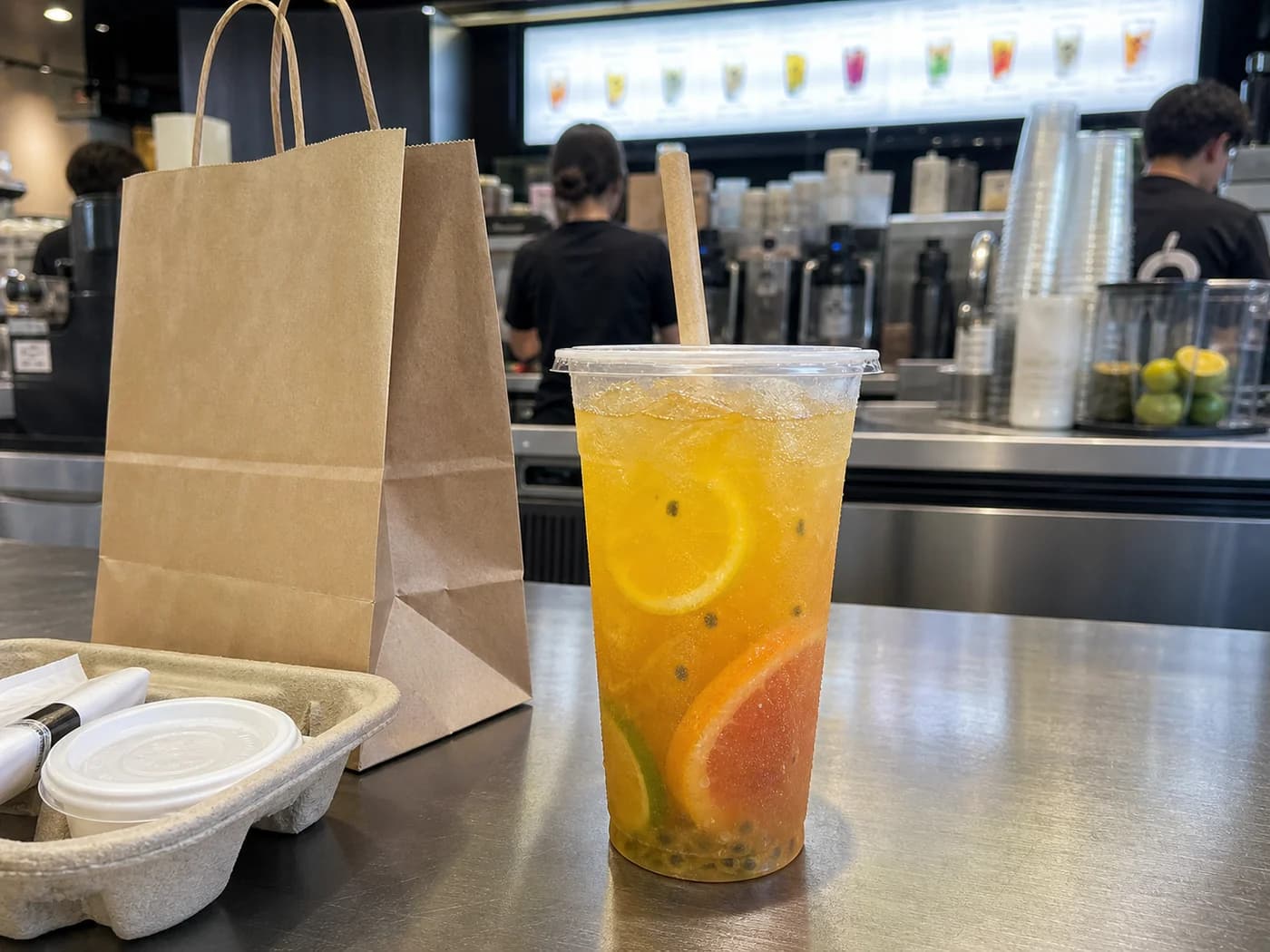
Iced drink packaging should be planned by menu category. Iced coffee, lemonade, fruit tea, smoothies, milk tea, and boba drinks may all use clear cups, but they do not always need the same lid, straw, or carrier.
List every drink size and write the cup capacity, rim diameter, lid style, straw size, and whether the drink needs a carrier. Include modifiers such as extra ice, toppings, milk foam, fruit slices, sealed film, or dome lids.
Confirm cup and lid fit before buying
The most expensive iced drink mistake is buying cups and lids that almost fit. Rim family matters. A 95mm cup should be matched with the correct 95mm lid, and a 98mm cup should be matched with the correct 98mm lid unless the supplier confirms compatibility.
If your shop uses multiple cup sizes, decide whether to standardize one rim family across several capacities. Standardizing can reduce lid confusion, simplify reorders, and make staff training easier.
Match straws to the drink
A regular straw may work for iced coffee or tea, but boba toppings need jumbo straws. Smoothies may need a wider straw even without pearls. Wrapped straws can help delivery and pickup orders feel cleaner and easier to verify.
Do not quote straws after the cups arrive. Quote straws with cups and lids so the accessory set matches the drink menu. If the menu includes both boba and non-boba drinks, keep straw types visibly separated at the drink station.
Plan carriers and bags for real handoff
Multi-drink orders are where iced drink packaging often fails. A customer or driver carrying three loose cups is a spill risk. 2-cup and 4-cup carriers help staff stage the order, help drivers pick it up, and make missing drinks easier to notice.
For delivery, check whether the carrier fits the handle bag. A carrier that is stable on the counter can still tip inside a bag that is too wide, too narrow, or too weak. The drink system is cup, lid, straw, carrier, and bag together.
Control condensation and temperature conflicts
Iced drinks sweat. Condensation can weaken paper bags, wet receipts, and damage napkins or hot food containers. Use drink-only bags or separate carrier handoff when the order includes hot food or delicate desserts.
Restaurants should also consider pickup shelf timing. If drinks are made too early, ice melt and condensation increase. Packaging can reduce mess, but station workflow and timing matter just as much.
Test the delivery version, not only counter service
A cup that works at the counter may fail in delivery. Test the actual delivery setup: cup filled with ice and liquid, lid applied by staff, straw or sealed-film workflow, carrier, handle bag, label, and realistic travel time.
After the test, check lid security, cup wall feel, condensation, bag strength, carrier stability, and whether the drink still looks like something the customer wants to reorder.
How GreenPack Life supports iced drink programs
GreenPack Life can quote PET cold cups, flat lids, dome lids, sip lids, jumbo straws, wrapped straws, 2-cup carriers, 4-cup carriers, handle bags, and custom printed drink packaging as one system.
For the most useful quote, share drink sizes, rim family if known, topping requirements, monthly volume, delivery percentage, and whether you need samples before switching suppliers.