
Design the station as a flow
A packing station is not just a table with supplies. It is a workflow that turns a digital ticket into a finished customer handoff. The best station has a clear direction: read ticket, choose package, pack hot or cold items, add accessories, check drinks and sauces, label, seal, and stage for pickup or delivery.
If staff need to cross the kitchen for lids, search a shelf for bags, or ask which sauce cup fits, the station is not finished. Every repeated question during service is a sign that the packaging system should be made more visible.
Put missing-item risks in the open
Drinks, sauces, desserts, utensils, and modifiers are common sources of missing or incorrect order complaints because they may be packed separately from the main entree. DoorDash merchant guidance focuses heavily on avoiding missing and incorrect items because order accuracy affects customer experience and operational performance.
Make these items hard to miss. Put sauce cups, napkins, utensils, straws, drink carriers, and cold dessert containers near the final check area. If the final checker cannot see the accessory, the team will eventually forget it during a rush.
Separate hot, cold, and drink workflows
Hot food, cold food, and drinks fail in different ways. Hot food can steam and soften fried items. Cold items can warm or collect condensation. Drinks can leak, tip, or be left behind. A packing station should not force all three into one pile before the final check.
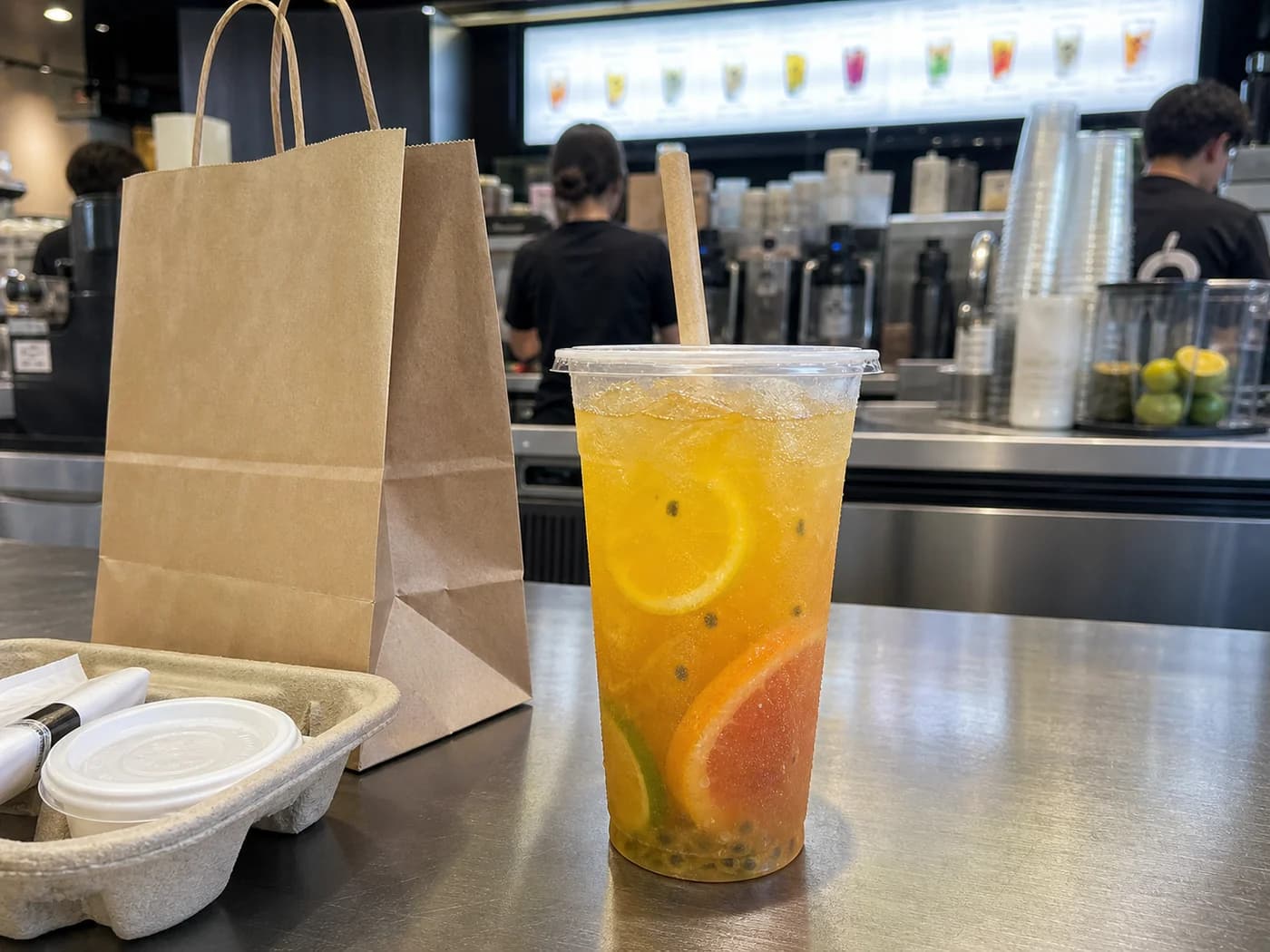
Use clear zones or trays. Hot entrees move through the hot zone. Salads and desserts stay cold and separate. Drinks are built in the drink zone with lids, straws, and carriers. The final close area decides which items share a bag and which need separation.
Label before handoff, seal after checking
Labels should help staff and drivers identify the order, but seals should not hide unchecked mistakes. The final checker should confirm main items, sides, drinks, sauces, utensils, customer name, and order number before the bag is sealed.
For delivery, use label placement that remains readable after the bag is folded or sealed. A label hidden under a handle or folded edge creates confusion at pickup shelves and increases the chance of a driver taking the wrong order.
Choose supplies that match the station
Packaging should fit the station physically. If the counter is small, use fewer lid families and stack containers vertically. If the shop sells many drinks, keep 2-cup and 4-cup carriers within reach. If delivery is heavy, reserve space for large handle bags and tamper seals.
A station with too many similar sizes can slow the team. Consider whether some menu items can share a container family, lid family, or bag size without hurting food quality. Simplification can be more valuable than having a special package for every item.
Train with real orders
Do not train the station only with single-item examples. Use realistic tickets: burger plus fries plus sauce plus drink, bowl plus side plus dessert, four drinks, catering tray plus utensils, and pickup orders mixed with delivery orders.
Run the test during a timed mock rush. Record where staff hesitate, what gets forgotten, which lids are confusing, and whether the final check takes too long. Then adjust station layout before the online channel gets busy.
How GreenPack Life supports station setup
GreenPack Life can help operators quote packaging by station zone: containers and bowls for food, cups and lids for drinks, carriers and bags for handoff, labels and seals for order control, and utensils or napkins for completion.
When requesting a quote, include the station pain points: missing drinks, leaking bowls, weak bags, lid confusion, too many cup sizes, or no space for carriers. These details help turn the quote into an operational fix instead of a generic product list.