
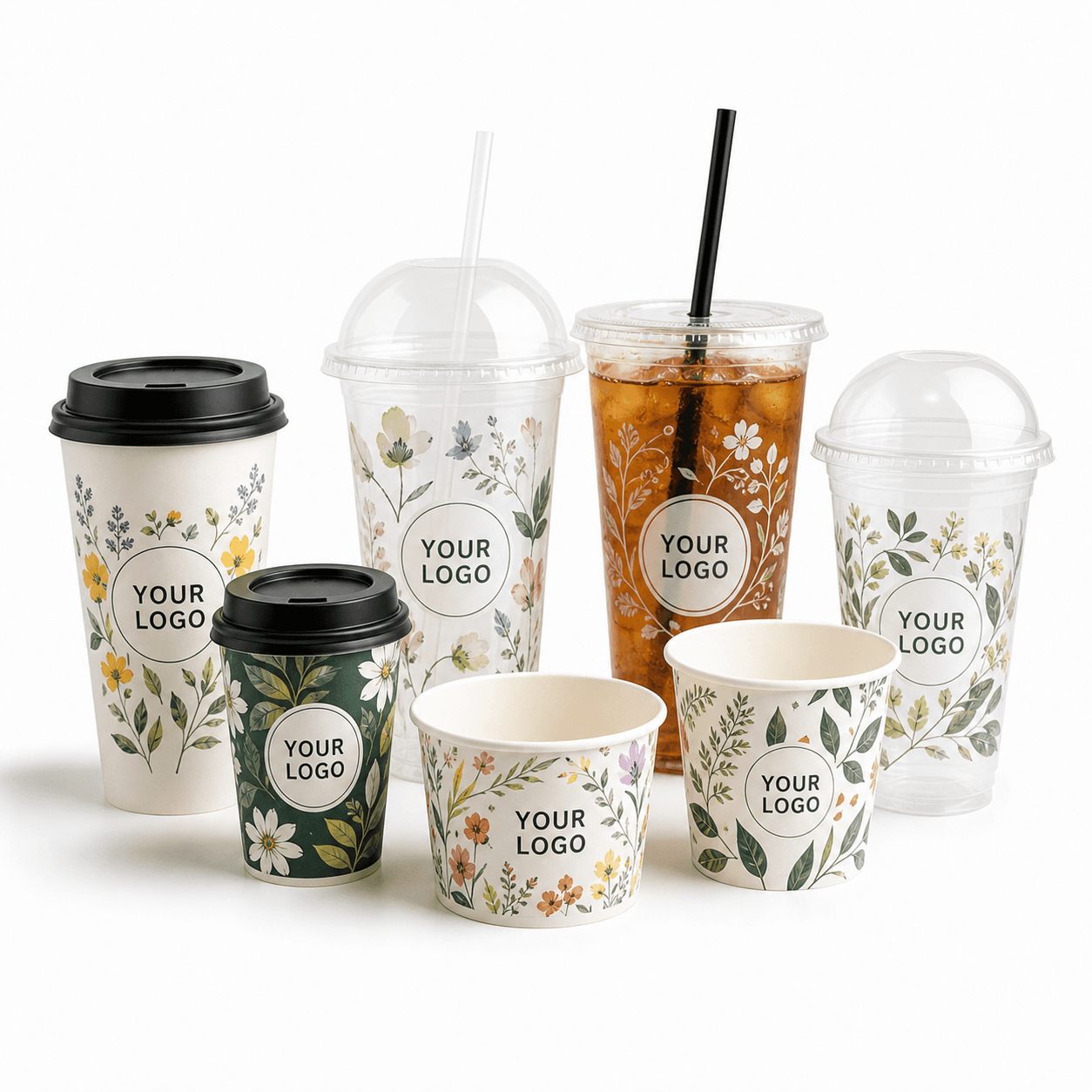
Prepare artwork early
Share vector artwork, logo colors, print placement, and whether the cup is PET, paper, or sealing film. Clear files reduce proofing delays.
If artwork is not final, send the latest logo and brand direction anyway. A supplier can still advise whether the artwork is likely to work on the selected cup or bag, but final proofing needs production-ready files.
MOQ depends on product and print method
Minimum order quantity varies by material, print colors, and production setup. A DDP quote should connect MOQ to the real landed cost, not only unit price.
Low MOQ should be evaluated carefully. A smaller print run may reduce inventory risk, but freight, setup, and per-unit cost can be less efficient. The useful question is not only whether low MOQ exists, but whether the delivered cost still makes business sense.
Use samples and proofs
Samples and print proofs help confirm color, scale, lid compatibility, and customer-facing presentation before production.
For a new brand launch, proofs can prevent expensive mismatches in logo size, ink coverage, contrast, and placement. For a chain or multi-location buyer, proofs also help keep the packaging system consistent across locations.
Choose the product family first
Custom printing works best after the product family is clear. PET cold cups, paper hot cups, sealing film, sleeves, and handle bags each have different artwork constraints and production considerations.
If the shop wants a coordinated brand system, quote the visible customer-facing pieces together. Cups, bags, sleeves, and sealing film can reinforce the same brand experience when they are planned as one project.
Connect branding to DDP planning
Custom packaging should still be planned through landed cost. Quantity, print setup, carton size, destination, and sample needs all affect the final quote.
GreenPack Life keeps the custom print conversation tied to the DDP buying path: artwork review, product fit, sample/proof needs, destination, and payment link after quote approval.
For a first branded order, decide which items must be printed and which can stay stock. Many shops start with the most visible customer-facing item, such as a cold cup or handle bag, then expand to sleeves, film, or secondary packaging after demand is proven.
Keep one approved artwork folder for each product family. Include logo files, print colors, placement notes, previous proofs, and any rejected versions. This prevents the next reorder from restarting the artwork conversation and helps new team members understand what has already been approved.
Also decide how the printed item will be photographed, stored, and promoted before production starts. A branded cup that looks strong on the counter can support menu photos, delivery inserts, loyalty campaigns, and social posts, so the print plan should fit more than one sales channel.