
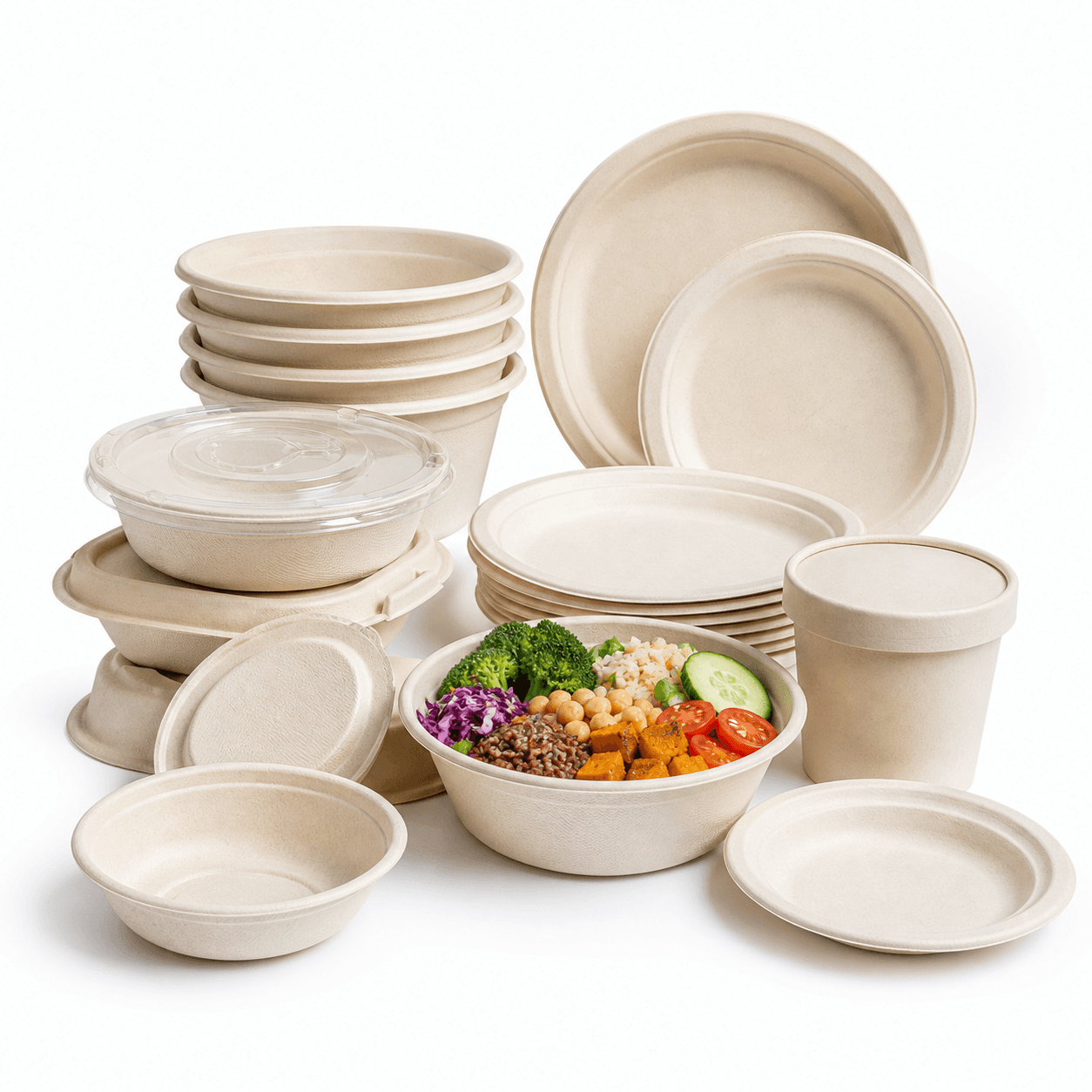
When bagasse is useful
Bagasse is a plant-fiber option for salads, rice bowls, catering, and prepared meals where eco positioning and a natural look matter.
It can be a strong choice for food businesses that want a warmer, natural presentation than clear plastic. It is often considered for rice bowls, salads, plates, clamshells, and catering sets where the packaging itself supports the brand story.
When plastic still fits
Plastic can still be practical when the buyer needs clear presentation, liquid resistance, or a specific container and lid system.
Some foods sell better when the customer can see the product clearly. Saucy items, cold prepared foods, and certain delivery workflows may also require a specific lid or container performance that should be tested before switching materials.
Quote by menu and use case
Choose packaging by food temperature, sauce level, delivery time, stacking, and customer handoff. Then quote the full mix with bags and accessories.
A takeout packaging quote should not isolate the container from the rest of the order. Paper bags, utensils, napkins, cup carriers, and labels often determine whether the handoff feels organized and reliable.
Compare storage and operations
Bagasse and plastic may stack, store, and pack differently. Before switching, test how the container fits shelves, prep stations, delivery bags, and staff workflow during rush periods.
Operators should also check lid fit and condensation behavior. A package that looks good in a catalog still needs to survive actual service conditions.
Use samples for real food tests
Samples are especially important for hot meals, sauced items, salads, and delivery orders. Test the package with the actual menu, hold time, stacking pressure, and customer handoff.
After the sample test, use the DDP quote to compare delivered cost for the full packaging set. The right choice balances presentation, performance, storage, and landed cost.
Restaurants should run tests during the same service conditions customers will experience. Pack a hot bowl, a cold salad, a sauced entree, and a delivery order, then check moisture, lid security, heat feel, stacking, and how the food looks when opened.
The final buying decision should include the customer promise as well as the container. If the restaurant markets eco-friendly meals, bagasse may support that message. If the menu depends on clear visibility or tight liquid control, a plastic format may still be the more practical choice.
For a mixed menu, it is normal to use more than one material. Bagasse can serve bowls or plates, while clear plastic can support cold prepared foods that need visibility. The goal is a packaging set that fits each menu category without confusing staff or customers.
Keep the approved test notes with the reorder record so future buyers understand why each material was chosen.